A new report from the Council on Foreign Relations reaffirms the importance of science education for the future of our nation. The National Academy of Sciences has developed resources to inspire future scientists and engineers, and expand the public’s interest in science in general . All of this media is free and is intended to be shared.
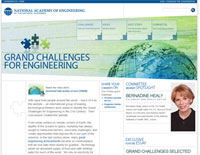
The National Academy of Engineering (NAE) has just released a series of videos on engineeringchallenges.org aimed at sparking interest in engineering among young people. Focused on the themes of NAE’s Grand Challenges for Engineering, they feature NAE members such as Disney/Pixar’s Ed Catmull, Caltech’s Frances Arnold, and Google’s Vince Cerf.
The National Academies YouTube channel carries a number of short videos that explain some of the most pressing challenges in science. From controlling zoonotic diseases to understanding the challenges of climate change, these films all feature scientists explaining the issues and their work.
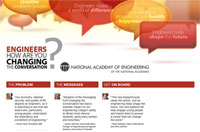
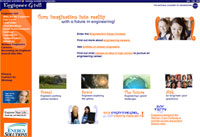
The National Academy of Engineering’s Changing the Conversation and Engineer Girl websites were developed to promote positive engineering messaging among engineers and to inspire both boys and girls to become engineers.
The Web site iWASwondering.org is a project of the National Academy of Sciences intended to showcase the accomplishments of contemporary women in science and to highlight for young people the varied and intriguing careers of some of today’s most prominent scientists.
The National Academy of Engineering and National Research Council produced a number of reports about the need to inspire and prepare students for careers in science, and the need to improve science education. These books are all free to download.
Surrounded by Science: Learning Science in Informal Environments240 pages | Paperback | Price: $22.45Practitioners in informal science settings–museums, after-school programs, science and technology centers, media enterprises, libraries, aquariums, zoos, and botanical gardens–are interested in finding out what learning looks like, how to measure it, and… [more]
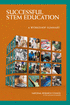
Successful K-12 STEM Education: Identifying Effective Approaches in Science, Technology, Engineering, and Mathematics44 pages | Paperback | Price: $8.95Science, technology, engineering, and mathematics (STEM) are cultural achievements that reflect our humanity, power our economy, and constitute fundamental aspects of our lives as citizens, consumers, parents, and members of the workforce. Providing all… [more]